Accept Gifts

present

A few days ago I got on a fairly crowded bus (“Use Public Transportation” is a post for another time) and a young black man leapt to his feet to give me his seat. I started to protest, but he’d already moved down the aisle so I dutifully sat. But his exchange started the usual whirl of thoughts. “Do I look that old?” “Is this a black/white legacy?” “Surely I don’t look that old!!” “And why me of all the people standing?” “I guess I can’t give up my seat.”

It also reminded me of a similar incident a few of months ago when I talked a guy out of giving me his seat, but the young woman behind him wouldn’t take “no” for an answer. “I’m getting off right away,” she said—which, by the way, wasn’t true, although I think she got off before I did.

I don’t know about you, but somewhere, somehow, I have missed the gift (yes, the gift) of receiving. It began when my mother-in-law gave me red, one-piece polyester “jump shorts” the first Christmas of our marriage. Cute in style, but I don’t usually like “cute” and the material had an embossed, same color pattern that to my 21 year old eyes (yup – married young) looked incredibly tacky. Somehow I shared how I felt with her. She never gave me clothes again. Heck, I’m pretty sure she avoided giving me or my children (yes, her grandchildren) anything personal from that time on.

ruby ringThen, there was the time I mentioned that the single roses a friend frequently gave me on perfect occasions always wilted within a day, thinking he’d evaluate the source. He just never gave me a rose again. Even when someone gives me something I think is perfect I don’t get it quite right. When my partner gave me my dream ring, nearly his first words were, “I knew you wouldn’t wear it!” (I’d taken it off to cook.)

I know children who delight in any gift whether penny candy or a new phone. As a result, people love to give them things. But while I think I love presents, there is something in my reception of them that often rings false.

And that’s for the “good stuff.” For all of us, I assume, there is the “loot” that appears that we all wish would go away: one more necktie, candy when you’re on a diet, the gift card from the store you’re boycotting, the jacket three sizes too big (or small). We joke about re-gifting but that often isn’t an option if the gift is from family or a close friend. Or despite yourself you “honestly” blurt out what you really did with it (“I knew you wouldn’t mind that I accidentally ‘dropped’ it in the middle of Times Square!”)

Tie collectionStores offer gift receipts that somehow never get packed with gifts you don’t want. Plus I live in fear of encountering someone who believes that if you admire something they should give it to you. (“I love that dress ON YOU…” So far that’s worked. Most of the time.)

But all these reactions aren’t the point, really. When I started writing this post, I thought that the main point was that accepting gifts isn’t about you or me. And it isn’t about the item offered, either. I thought I was coming to realize that the important point was simply that the gifts were given. At that moment. And in that context, it was important to the giver that a gift, that gift, be given. I was so sure of this that I didn’t even search on Google for “accept gifts” until I thought this post was finished. Then I checked Google and was surprised to see that “accept gifts graciously” appeared with multiple links. And many of these links agree with this idea.

So I’m not the only one who believes that gifts are given because the person wants to connect in some way. People present gifts because you’re leaving a job and they don’t know what to say. It is the drink someone wants to share, whether you want one or not, because they need to talk. It is the love of tradition during the holidays and on birthdays where merely having things to unwrap represents the ritual of the day. It’s offering you a seat on the bus because that’s what one does. There are also the gifts you get just because you gave one (we’ll talk about the giving part another time). You can add more.

However I realize that this logic ignores things we’ve already explored. For one it ignores the importance of giving thanks, that simple ritual so basic to changing the world. (Some of the Google links do share that.) But I think that even more important is that, at the moment you are offered that truly horrible gift, you are willing to be wrong in thinking the gift is horrible or unneeded, and so, learn something about yourself. Let us suppose that at that moment, whatever it is that is being given to you is exactly what you need—even though you had not thought so before. Can you see it? Perhaps you suddenly realize how important it is to support the giver. Perhaps the gift is telling you something about the giver that it is important for you know. Perhaps you realize the gift is really one of inclusion as you honestly thank someone for bringing that piece of cake by your desk (the one that you then have to figure out how to throw away without anyone seeing). Perhaps you need to stop thinking you should and can provide everything for yourself.

But how else does “accepting gifts” change our world? There are at least two things to consider on accepting them and I’m betting there are more than that. First, see the additional possibilities or information in the gift. If you received 10 more neckties, could it be a weaving or a collage—a brand new piece of art? At the age of 21, what my mother-in-law did not know was that I felt embarrassed wearing red. That color was much too bold. Since then I’ve learned it is one of the very best colors for me to wear, and I think she knew that. Might I have learned that about myself sooner if I had really seen my mother-in-law’s gift? Creativity. Insight. Information.

bus seatsThe second challenge found through accepting gifts is to see the world as abundant. It is through abundance that positive change can occur. We are challenged to see the world as a place of more neckties than we need, delicious food to share, and outfits that expand the possibilities for, well, everything. Realizing this abundance is one of the core components of how Spirit Moxie works. It is only in the overflow that new (and for us positive) patterns can be born.

Meanwhile, maybe you’ve always understood how to “accept gifts” in the right way. If so could you please share tips with the rest of us? For on a deep level accepting a gift changes us, the recipients, and on an even deeper level it will always change the world. At the very least, maybe you’ll get lucky on that crowded bus and get a seat.

___________________________________
Photo credits from the top:

Birthday present with a bow — shorts and longs —Julie Rybarczyk
The perfect ring — Spirit Moxie
Tie collection: “a strangling of ties” ?— rjp (zimipenfish)
Bus seats — Spirit Moxie

Chocolate!

Cocoa beans in the hands of the farmerChocolate? Last August when I asked “What’s on your list of little things that make the world work?” I got brilliant responses, all of which are being incorporated one way or another into these Spirit Moxie conversations.

But one response simply was, “Chocolate.” And as with any unexpected response I’ve been thinking about “chocolate” ever since. Chocolate. No verb. Just, well, chocolate… A quick Internet review says that this has been on our food list for at least 4,000 years, which is all very interesting, but what does chocolate say to my world and yours in 2014?

Half full heart shaped box of heart chocolatesValentine’s Day is just a few days away and I can remember countless Valentines when others hoped for chocolate and I hoped no one would give me chocolate. Flowers would be good. Flowers aren’t fattening. Of course chocolate isn’t either, in moderation, but I have consumed tubs of chocolate with almonds despite my protests that I prefer salty things and flowers seem safer.

Sign to Hershey's Chocolate WorldWhen I was growing up I lived near Hershey, Pennsylvania, before hordes of tourists visited there and before safety in factories was as highly regulated as it is today. The last time I was in Hershey the only way you could learn about Hershey’s candy was a mechanical ride that took you through depictions of how chocolate candy was produced.

But I can remember when we could tour the actual Hershey plant and see the huge vats of chocolate being churned and feel overwhelmed by the smell. We were probably given some sort of sample at the end, but the real reward was that across the street we could buy a huge box (two pounds?) of something we called “half and half.” It seemed as if it was half chocolate and half almonds, the solid bar barely scored into smaller ones. The only proper way to eat it was to break off chunks and you could buy this magnificent treat only in the town of Hershey itself. Nothing tasted like it. A Hershey’s almond bar didn’t come close.

Chocolate weaves its way through my life now that I’m thinking about it. There was the Whitman’s Sampler® that was beloved by my paternal grandmother and had me agonizing over the “map” that named each piece. There were my feelings of “finally I’m an adult” when I discovered GODIVA. When I moved to Cincinnati there was the local pride in Aglamesis Brothers and Esther Price, perfect gifts to bring when going out of town.

And then there was graduating to the flavors of other specialty brands in other cities at other times, often through the aegis of my younger son who seems determined to know the esoteric. So chocolate is one way to claim my history, not a bad legacy for such an ancient food.

Equal Exchange chocolate bars on bamboo matRight now I have an emergency order into Equal Exchange, known for fair trade products, particularly coffee and chocolate. They used to always supply my coffee, but I’ve found other fair trade sources for coffee. However I’m almost out of their hot cocoa mix, a bitter yet perfect blend that I don’t use often, and a girl needs to be prepared. And of course, as I was ordering anyway, I stocked up on bars of dark, dark chocolate and did include a bag of coffee.

So how does this fit, this challenge to consider chocolate as a way to make the world work? It will be a little different for all of us, but I think chocolate feeds into many ways of how we can change the world, help it to work a little better. It feeds into Spirit Moxie conversations that are planned such as “accept gifts” (even chocolate), “be generous,” and “love.” And there is the whole concept of fair trade, a deliberate and life affirming program to change the world.

But even more chocolate challenges us to truly enjoy the great things in life. To taste. To talk about. To share. What challenges and calls to you? Coffee? Wine? Beer? Bourbon or a great scotch? The latest flavor of ice cream or crisp popcorn, with or without butter?

Chocolate?

__________________________

Photo credits from the top:

Cocoa farmer David Kebu Jnr holding the finished product, dried cocoa beans ready
for export — photo by Irene Scott for AusAID (13/2529) —Australian Government, Department of Foreign Affairs and Trade

Chocolates — Sean MacEntee
Hershey Park — Ed Kennedy (lostinmiami)
Our Products 100 Gram Chocolate Bars — Equal Exchange

Brush Your Teeth

We all know that brushing our teeth is important. Our moms told us. Our dentists and Sesame Street poster on brushing your teethhygienists tell us. Most of us know that brushing helps prevent tooth decay and gum disease and that it helps keep bad breath at bay (which might have something to do with making the world work better!). Furthermore, brushing has been increasingly linked to heart health, and I just found a website that makes the case for linking not brushing to respiratory disease, premature births, dementia, and erectile dysfunction. The article also says that brushing your teeth can help with weight loss as well as improve your sex life. From reading all of this I now know I should be brushing for two to three minutes each time. Somehow I missed that in the instructions!

This is all very well, but what does it have to do with helping the world work (except of course for the bad breath part)? Quite simply, our health, our personal health, helps the whole world to work better, not just our own corner of it. When we claim the responsibility of being part of the world, we see that by taking charge of our health we contribute monetarily and productively.

Costco display of electric brushesMonetarily, we contribute by not adding extra burdens to the healthcare system or straining our own resources or those of our families. Quite apart from the online scrambling caused by the Affordable Care Act, human resource people know that a healthy employee both saves the company money on insurance costs and is more productive. In fact last year the costs (not including medical insurance costs) of poor health and the resulting lost productivity cost employers between $225.8 and $344 billion.

When we are healthy we are more productive plus we free ourselves by having the Toothbrushes in glassenergy to do what we’re called to do. We’re more fun to be around when we’re healthy. Can you see the spiral and the tags on this one? While many people have health concerns, even major health issues, it is how an individual deals with those problems that ultimately determines the affect on others.

So take brushing your teeth as a commitment to yourself. And remember while you’re brushing that a commitment to yourself actually benefits others.

You can’t help the world work if your body doesn’t work. Really.

What are the “little things” you do that would help the rest of us ensure our good health?

Toothbrush drawing with "Habits" written on it


Medical review by Amy Ammer, hygienist, courtesy of Andrew J. Marck, DDS

Photo credits from the top:
Brush Your Teeth Twice a Day Day — @NonProfitOrgs
Costco electric toothbrush display — Spirit Moxie
Toothbrush3 — © Serna | Dreamstime Stock Photos Stock Free Images
habits-toothbrush-1a–richardstep-unleash-your-strengths — Richard Sephenson

Regret

Here at the end of the year and the beginning of the new one, there are multiple suggestions for evaluating our past year. What are your New Year’s resolutions for 2014? Did you meet your goals for 2013? Did you review them during the year? Did you make them and ignore them or, gasp, did you ignore the whole process? I’ll admit that most years I’ve listed goals, which seemed more positive than New Year’s resolutions, and then sometime in the following year have looked them up in whatever journal I wrote them in to see how I did and start all over.

But in listening to those who seem to have goal setting and New Year’s planning down to a Spilt milk - a glassscience and also while walking down the street and, frankly, eavesdropping, I’ve been struck with the negativity and extent of the “regret” I’ve heard and felt. Regret that I didn’t work on my poetry this year. Regret  that I didn’t wish the waitress “Merry Christmas” when I won’t see her again before the holiday. Regret that I didn’t take a couple of aspirin last night after drinking a tad more than I probably should have. And this is quite apart from the obviously life changing events that we regret: that one didn’t look both ways and see the car going too fast; that one regrets, in retrospect, agreeing to the seduction of a stranger; that one didn’t kiss one’s sweetheart good-bye that fateful morning. Plus the overall regret: the niggling suspicion that those resolutions for 2014 are already toast.

One positive thing about regrets is that they can be a useful heads-up. They may be part of a process of mourning, whether related to a death, error, or simple stupidity (at least that’s what you’re calling it). But the truth is that the longer we cling to that “what if” or beat ourselves up for that impetuous action (or lack of same), the longer we ourselves will stop living.

Yup. Regret pretty much kills the moments during which it exists, keeps us from claiming the present, and blinds us to the multiple joys and possibilities that exist in any one moment.

A few minutes ago I boarded a plane in one of those ubiquitous, strange, transitional, airports and realized after I found my seat that while I had my phone, I didn’t have the case for it — the case where my driver’s license and all my credit cards were. Major regret at not being more attentive. Panic at not being sure where it was. Desperation in trying to figure out how I’d manage without the cards and ID. Anger at this one more manifestation of what I call “mind fade.” Frustration that there was a long line of people getting on the plane behind me that was preventing me from dashing back to the terminal.

The missing phone caseSuddenly there was a flight attendant doing her helping people board routine. She calmed me down with a “I’ll call up [past all the people getting on] and tell the attendant in the front. What does it look like?” Shortly afterwards I got a thumbs up that the other attendant had it. And when it was delivered it included a printed slip with my name, itinerary and seat number, and what looked for all the world like an apology as if it was Delta’s and not my fault.

Now I could keep on regretting my absentmindedness and beating myself up for carelessness. But if I did, I’d not see the sun on the snow below me, be impressed by my neighbor’s unobtrusive friendliness, and marvel and be grateful for the empty seat, on an otherwise full plane, between us.  On this flight, I’ve learned that I really can use my headphones and no one can hear me. I used a beverage coupon that was handed to me out of nowhere a few days ago. And the retrieval of the phone case is now a good story (albeit, I hope,  a warning to pay attention to my belongings).

Plus I’ve had the opportunity to write to you. So don’t cling to regret. You’ll miss the possibility of what is around you. Right now.

______________________________________

Photo credits from top:

365, Beverages…..no use crying over it! — Andrea_44
Missing phone case — Spirit Moxie

Survey Results

Surveys are only fun if one sees some results. “How are you doing? A 2013 review” produced the following statistics.:

1. Are you more aware when you smile?  IMG_1041
–  Yes – 56%
– The rest were evenly divided between “Not really” and
“Working on it”

2.  Have you let people open doors for you ?
– Yes – 67%
– Not really – 22%
– Working on it – 11%

3.  Have you opened doors for others?Thai Shoes
– Yes – 100%!

4.  Have you been wrong and content to be wrong?
– Yes – 89%
– Working on it – 11%

5.  Are you using revolving doors?Revolving Door Cincinnati Public Library
– Yes – 63%
– Not really – 33%
(For the person who asked, this wasn’t a trick question. It was simply about using revolving doors, but not everyone lives where there are any.)

6. Has your thankfulness increased?
– Yes – 67%
– Not really – 11%
– Working on it – 22%

Two comments were shared:

One shared they were really working on joy!

Another talked about a book entitled Die Empty. If whomever you are would share the publication details either in the comments or in a note to me, it would be appreciated!

And all of this shows we are beginning to engage the conversation of the little (and
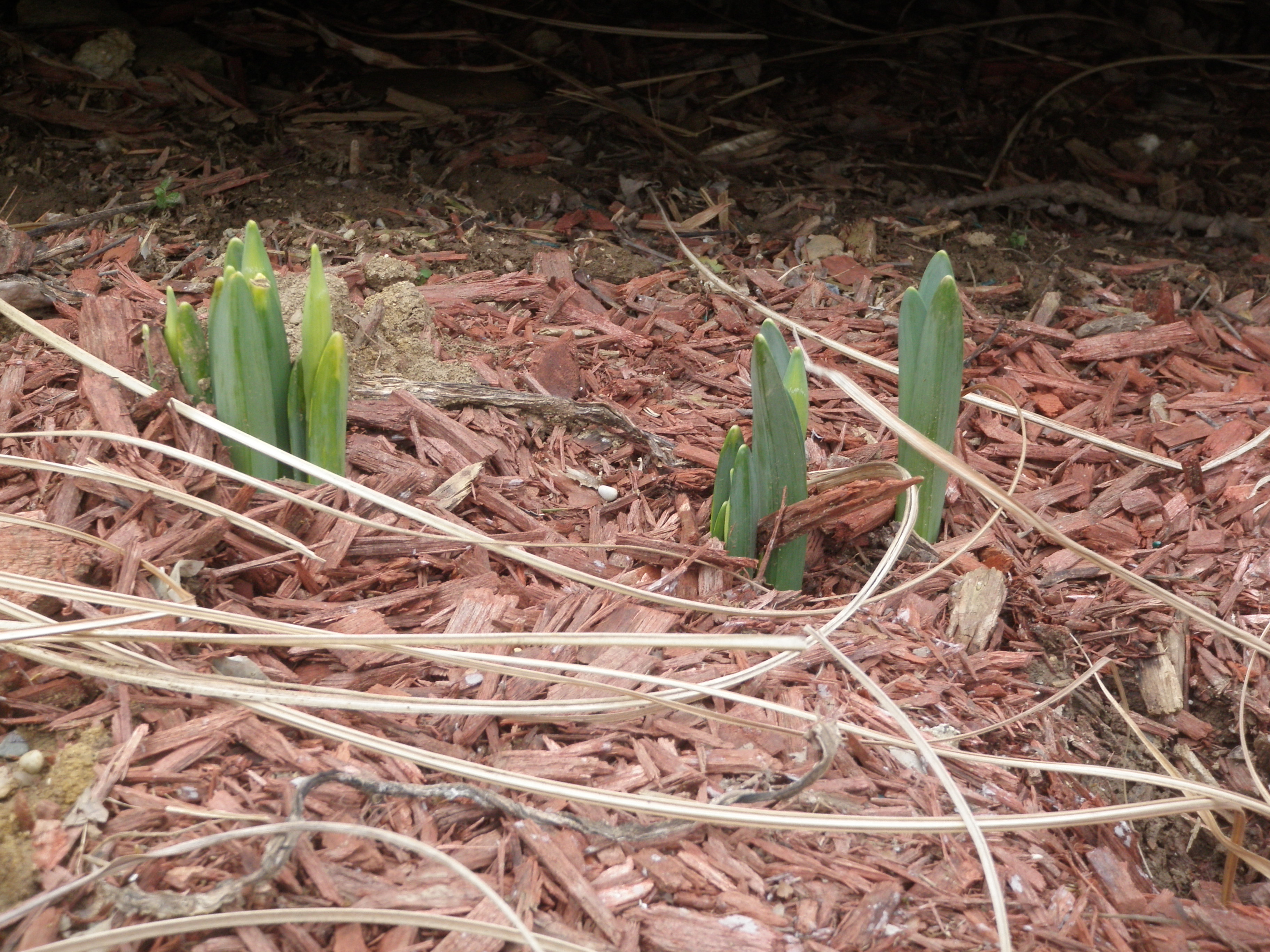
Shoots peeking through the ground
sometimes bigger) things we do.

Welcome 2014!


All photos by Spirit Moxie


Give Thanks

Harvest FruitAs we gathered for our final committee meeting, we mainly gave thanks for not having killed each other. It had been a long and frustrating process that, in the end, somehow worked out as had been hoped. So this meeting over food and wine still prompted me to ask, “For what are you thankful?” Besides gratitude that we had not killed each other, we were also thankful for the amazing fact that we were still talking to one another. In the two-plus years the project had lasted, one of us had learned to let go of his need to always be right, which he said was his cause of thanksgiving. Another had found a group where he really could voice his opinion. All of us were amazed that the members of the group were now friends, even after coming to know each other in almost embarrassing ways.  And there was, of course, our thankfulness that the project was over and the result looked promising. And it was enough.

The good woman

There’s a trend on the Internet, maybe particularly on Facebook, to post a daily gratitude such as that a friend came to visit or a new office had opened. For Thanksgiving Day, 2013, Spirit Moxie asked people to list three things for which they were grateful. The responses included the love of a good woman, wonderful and patient friends, family, technology, and “the magical effects of yeast and grapes.” What’s interesting about this is that it has been shown that gratitude, giving thanks, can actually hard wire the brain to be more positive and more productive. Thanks makes our minds work more easily.

Why might this be true and what difference does it make? If you become positive in the present rather than feel happy only as a response to some event, such as a raise or a compliment, you are actually more productive and successful. In other words, it’s been proven that happiness leads to success rather than vice versa. When you are positive in the present, you are not dependent on events for your happiness. While the importance of gratitude is prevalent right now as a conversation, one way to see why this matters is by watching Shawn Achor’s TED talk,  which is one of the funniest and clearest defenses of how this works. According to his research you can rewire your brain through 21 days of two-minute exercises: thinking of three new things you’re grateful for or journaling for two minutes about one or exercising or meditating or sending a random positive email to someone. (No, you don’t need to do all every day. From what I read you just pick one a day, and they can be different ones.)

Happiness first, leading to a more effective life for us and, as a result, for those around us.

But what about just saying thank you? What about that automatic response when someone does something for us, hands us something, tells us something, or opens a door? The prod we give young children (“Say thank you!”) when someone gives them a candy bar or a dollar. The words most of us actually recognize in multiple languages. Gracias [Spanish]. Danke [German]. Merci [French]. ขอบคุณค่ะ kob khun ka [Thai]. [ASL]

Giving thanks. Saying thanks. Being thankful. I’d suggest that those simple words claim our interdependence. However much we’ve been trained to do it all for ourselves, “thank you” reminds us that lives are easier and more abundant because of those around us. “Thank you” tells others that we’ve noticed and, for that second, the world worked; the energy in it was changed a bit for the better. No, we don’t consciously think this every time, but it is the very automatic-ness of it that holds much of our day to day together.

So, the thank you note you did or didn’t write to Aunt Margaret, the thank you email the Laptop and working lunch. An outside table with a silver laptop, coffee and a sandwich on it.new rules say you should send after an interview, the text message sent after you got home from that special dinner (however ordinary it was), and the words to the kid who bags your groceries all matter. Plus there’s our gratitude for having groceries to bag, an aunt to write notes to, and for the Spirit Moxie “followers” who are reading this. “Thank you” is an easy way to begin with words and suddenly have our world work just a little better. Two minutes a day. For a lifetime or so. Report in. What are you thankful for and what difference have you seen?

Oh, and thank you!

_____________________

Photo credits from top:

Harvest fruit: California vineyards at harvest time – Damian Gadal
A good woman and friends – Bill Nienaber
Laptop and working lunch, © rcp:051010:a0021 – Rob Pearce


Vote

291772635_9e8117746a_b

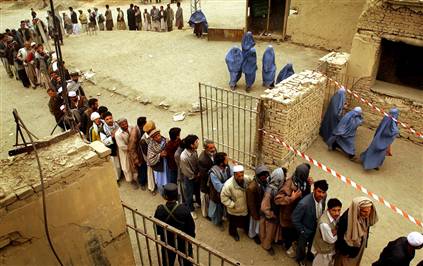
Obvious right? Voting is important. Sometimes throughout history casting lots, drawing a name out of a bag, or following some leader’s decree has decided things. And there are times when a clear consensus determines who should do what. But in today’s world, an election results in the most honest reflection of what we think is best for our country or our world. If you have the privilege of voting, you should do that. It’s part of freedom and responsibility and citizenship.

So are you voting? Here in the United States, 2013 is not a presidential election year. Even last year when we did elect a president, a disproportionate number of people seemed convinced that the election somehow wasn’t about them. I can still hear them. That their vote won’t make a difference. That they don’t like any of the candidates anyway. That no one who is any good dares run for elective office. That it is too much of a hassle.

5279790338_5e25faa5b6_bBecause I’ve worked for women’s organizations and have heard the stories of women’s suffrage repeated over and over, I particularly don’t understand women who don’t care that in 1917 several women were imprisoned for two months where they were essentially tortured, humiliated, and force fed when they went on a hunger strike so that she, the woman of today who doesn’t have time, could go to the polls last year, this year, next year, and every election year in the future and cast a vote.


794324_5ecb6382d1_oAnd I don’t understand people who don’t appreciate the fact that we can just walk or drive to the polls and not be hassled at all except by those people standing a prescribed distance from the door campaigning for their candidate. Don’t appreciate that they’re not in a country where people risk their lives to go to the polls, where observers from other countries are invited to keep elections honest, and where the voters often don’t think much of their choices either, but are grateful that there are choices to be made.

For those into politics voting is fun. And even the rest of us make a game of it. Spirit Moxie tried to take a poll on Facebook for the best motto for the site. (You can still have a say. Do we talk about “little things to make the world work”? Or “little things to change the world”?)

But some games get huge results. For example during the Christian season of Lent, Forward Movement Publications plays with a certain sports metaphor by creating a “game” called Lent Madness. It creates a bracket of saints (yes, saints). But the competition between them is the vote! On each designated day people vote to declare bracket winners, as the competition goes through the days of Lent. Hundreds vote daily. The event has almost 1,500 followers on Twitter, more than 5,000 likes on Facebook, and was even mentioned  in Sports Illustrated!   People take sides, even organizations take sides. And it’s quite clear that votes count. (“The polls close in an hour and only 20 votes separate the two…”)  Here politics, voting, a little education, and a sense of play all come together. I’ve seen people campaign for their favorite saints and I’m told there are parties on election days.

8071280173_77faa90112_bBut on the national election front voting somehow can get careless. It doesn’t have to be. It shouldn’t be. Last year I remember physically wending my way to the downtown office of the Board of Elections because I didn’t trust a mail-in absentee ballot. This year I congratulated a friend who made sure to vote before she headed off on a cruise. And as I don’t always know multiple local candidates, I called someone who does, who also shares my political views, for some input.

So are you willing to vote for fun? Are you willing to vote because whatever the issues are where you live, controversial or not, voting says you are willing to help change the world?

Picture credits from the top
voting instructions — liz west
Women in horse-drawn carriage and on foot march in street for voting rights carrying banners “Mothers Prepare the Children for the World…” “Women Need Votes…” and “Suffrage Pioneers…” — Kheel Center
041009_voting_bcol.h2 — Isaac Mao
Would billionaires spend millions to influence your vote if it had no value? — DonkeyHotey/Flckr

Inside Out, the Art of JR

Pasting at CAC

On September 20, 2013, after not hearing from me for a week, those on Facebook saw a post saying I’d been to an art opening. The description, buried in the comments, said this was “a global participatory art project with the potential to change the world.” Heady stuff. So, on September 23, I headed downtown again, willing to participate and learn more.

What I saw that Monday on Fountain Square in downtown Cincinnati and at Cincinnati’s  Contemporary Arts Center (CAC) three days before, was the lifting up of absolutely everyone, the celebration of our uniqueness, and the claiming of our power to be bigger than ourselves. And having fun doing it —all with the simple tools of paper and glue!

As a young man the French artist JR and his friends challenged the law by writing their IMG_1294names in out of the way places on the rooftops of Paris. After finding a 28 mm camera in the subway, JR photographed others doing this graffiti and and claimed these photographs as art by posting the images on walls around the city with frames drawn around them. This became his first public exhibition known as Expo2Rue (Sidewalk Gallery).

The streets are the biggest art gallery in the world! JR’s story has a lot to do with meeting people within the uniqueness of where they are. It began with his taking pictures and posting them in the poorer areas of Paris. During the violence of the 2005 riots in those areas, JR recognized some of his pictures still on the walls. “I know those guys.” So he then searched for and found some of them and again took pictures of them looking appropriately tough (although I think only one of them pulled it off, and as the project progressed, JR’s humor becomes evident). JR then posted posters of these photos in IMG_1299more bourgeois districts. He also gave them a voice. In the CAC exhibit these pictures are displayed with a statement from each individual photographed. As illegal art it sort of failed because Paris decided to wrap the prints around city hall. But that began JR’s pattern of inspiring, making visible, and collaborating with the people he meets.

From those roots JR has continued doing “impossible” projects. The conflict between Palestine and Israel is intense. It would be impossible to wander and work across the lines, or so he was told. So of course in 2006 and 2007, he and a friend visited both sides of the conflict. What they realized is that everyone does the same jobs and they pretty much look the same too. And thus began the biggest illegal art exhibit in the world: Face 2 Face. IMG_1304 With his subjects’ permission JR took pictures of people such as cab drivers, lawyers, and cooks, and pasted one from each side next to each other in eight cities on both sides. “What are you doing?,” he was asked. “Art,” he answered. “Who are they?” “They’re taxi drivers. One’s Israeli, one  Palestinian.” “Why are you posting a picture of a Palestinian here!” “It’s art.” [pause] “Do you know which is which?”

IMG_1284A more recent example is the project Women Are Heroes, which is designed to underscore how women are the strength of a community, while men get the attention. Targeted for places with “zero museums,” he visited areas such as one of the poorer slums of Nairobi and engaged with the people. IMG_1277There pictures of women are printed on vinyl and are used to roof the homes where they live. This project was so popular they go back every year to expand it. Another destination was a drug cartel’s “favela” [slum] in Rio de Janeiro where three boys were “arrested” by the army and taken to another favela where they were literally cut to pieces. After JR and his friend assured the drug lords that they were interested in only art and in the daily life of the favela, they interviewed and pasted pictures which were out of reach of the media since they didn’t dare enter but IMG_1288could see the prints in the distance. But one picture was not visible from a distance: a picture of the grandmother of one of the boys who was killed, which is pasted on the steps where the arrest happened and where other violence is common. JR also promised the women that he would share their stories with the rest of the world.

In 2011, JR was awarded the TED Prize “to change the world.” TED Prize winners are given “$1 million to inspire dreamers to think bigger about what’s possible. The award offers support to build a project’s core infrastructure quickly—so that others can add their own collaborative action.”

Upon receiving this prize JR asked, “Could art change the world?” Those who hear his story are sure the answer is “yes.” For this challenge, he created the Inside Out project. Inside Out offers to print poster sized head shots of those who want to make a statement on a cause they believe in. (“You take the picture, you paste it.”) As part of this project photobooth trucks were built. People get IMG_1253their picture taken in the small booth in the truck and the large poster is printed out the side for ready pasting.

JR’s team took the photobooth to Israel and Palestine where thousands participated, each signing a statement supporting a two-state solution for peace.  On one side of the conflict they used the photos for protest signs carried in a huge march. On the other, people plastered the posters in the streets and wrapped buildings with them. In his 2012 report on the TED prize, JR said, “Don’t tell me they’re not ready for peace out there.”

It’s with the photobooth that I connected. It makes people visible. It’s art “with no credit, no logo, no sponsoring.” It started with people participating in the photobooth at the CAC exhibit opening, which is JR’s first solo U.S. museum exhibition. Photos were pasted on the huge white walls of the museum forming a quilt of, well, people! The line was long that IMG_1256night. I was curious about participation away from the museum so I showed up on Monday on Fountain Square in the center of downtown Cincinnati. There even the time spent the line was interesting. As helpers moved down the line with their iPads getting photo releases, they spent all the time needed to help those unsure about what was going on or the electronically challenged. “You should do this too, not just your friend. You’re beautiful,” they said, convincing onlookers to participate.

Until a rain shower two weeks later (paper and glue are temporary!), I was part Fountain IMG_1258Square. And am still on the projects website. And I’m here, too.

Every person is important and visible. Every person has a story. Everyone is part of something bigger than themselves, but unique in themselves at the same time. Inside Out.IMG_1270

This looks like art. This sounds like changing the world


IMG_1307

All photos by Spirit Moxie
from the top:
JR pasting during the CAC art opening
The 28 mm camera JR found on a Paris subway
“Local urban youths” – Portrait of a Generation
Two images from Face 2 Face
A video showing a train with eyes passing over the lower faces
The rooftops of Kibera
A public stairway in Moro de Providencia
Me outside the photobooth truck
The line
Fountain Square (2 photos)
Hidden art at CAC (JR still likes roofs….)

Be Willing to Be Wrong

The wrong way Being willing to be wrong or, perhaps even harder, being willing to change is a challenge that has received a lot of attention from those looking at our actions and the affect those actions have in forming a more positive world. There are articles from the Dali Lama and Deepak Chopra, random sermons, social medial quotes, and disturbing studies on how difficult it is to change your mind, even with facts. But the consensus is that this willingness to see another version of what you know is true is the heart of healing our world.

This week I’ve learned that “being wrong” is a dangerous topic on which to write! The week included my walking off with someone else’s shopping cart, trying to pay with a membership card, and turning in the wrong driveway. And that  all happened in just one day. Perhaps none of those events mattered that much, but my apparent inability to do anything right began in the middle of a funeral. “I should have told Josh,” I whispered to the friend sitting next to me. “Yes, you should have.” And there you have it. Sometimes one is wrong, willingly or not.

IMG_1248Like a two-year old, my immediate response to almost anything is “no” or “can’t” or “won’t.” If I weren’t wrong a lot, I’d never be so bountifully blessed with great friends, beautiful places, and incredible experiences. A few months ago I moved into a small jewel of an apartment with all my worldly goods, many of which I hadn’t seen or touched for more than a decade (a story for another time). For example, I was sure the two big pictures should go by the window and the quilt should go by the corner cupboard to define the “dining room.” “No,” said Phyllis, “the quilt goes in the middle of the pictures. And you should put nails up to hang stuff in the kitchen.” No, I thought. Quilt on the end. No nails.

IKEA railsBut at IKEA I found some incredible “rails” to hang things on for the kitchen – a compromise to my original “no.” And when the pictures were hung, the quilt clearly belonged in the middle. Now this is a tiny example. While my apartment might look better, the world as a whole isn’t affected by better accessibility in my kitchen or by picture placement. Or is it? Is a willingness to be wrong a way for some other truth, perhaps in this case about friendship, hospitality, and beauty, to blossom?

And there are other angles. A common one is assuming you understand what is going on with someone else. “Tell me where I’m wrong.” When Martha Beck trains her life coaches, this is one of the first phrases they learn. This is a concrete way to see whether your assumptions about someone are true. In her recent three-day workshop that I attended, she used that phrase over and over again when engaging with participants. Maybe because they’re in awe of her, no one came up with anything…

6027755162_55bb4ed607_oBut this isn’t always true. One of Beck’s gifts is her ability to tell stories about herself. Yourself is really the only person you can tell stories about. And this “willingness to be wrong” piece comes up over and over in her voice and other voices as people work to heal the planet, beginning with themselves, often in relation to things that seem simple or silly as we go through our day. Remember how sure someone was that you never_______  – pick a topic. Eat grapes. Wear red. Answer texts. Fly kites. And how they argued with you when you bought grapes, “but you never eat them!”? I’d guess that most problems between people are based on “being right.”

Ah, but what about the big issues? As I look out the window while writing this, the world is quite clearly flat. And I can’t think of a single action I might perform right now that doesn’t support that notion or that might be threatened by my being wrong.  But I am wrong. Or am I really? We used a level on every picture when we were hanging them. Isn’t that as true as the curved earth picture that sometimes appears at the top of this page?

The problem with being wrong is that we’re so sure we aren’t. Something is categorically, unequivocally the way we say it is. I used the “flat world” example because currently, although it was once controversial, whether the world is round isn’t a hot, political topic, and I’m more interested in our theory than an argument. But how might those who disagree with us on the hot topics be right? Even if you realize you can’t give up your opinion, what can you learn from the other side? Or is it even a side? Play games with it. If you think it is stupid that so and so is doing whatever, come up with at least three reasons that might make sense. (“Why are they buying only one small thing when there’s no parking and the line is 20 minutes long?” Well? Maybe they got to the car and realized they’d forgotten one thing. Maybe they desperately needed to kill time and impossible shopping does that for them. Maybe they live next door, even if you’re sure there’s no housing there.)

While I haven’t listed controversial topics, you’re welcome to. In fact, I hope you will. But when you do include a bit of the other side. This really is the beginning of making the world work. So let’s start!

_____________________________

The Place Where We Are Right

From the place where we are right
flowers will never grow
in the Spring.

The place where we are right
is hard and trampled
like a yard.

But doubts and loves
dig up the world
like a mole, a plough.
And a whisper will be heard in the place
where the ruined
house once stood.

—Yehuda Amichai (via Parker Palmer on Facebook)

_______________________
Photo credits from top:

The wrong way – smlp.co.uk
Rounds and Then Some (Quilt by Loni Kula) – Spirit Moxie
IKEA rails – Spirit Moxie
Duty Call: Someone is WRONG on the Internet – xkcd.com