Brush Your Teeth

We all know that brushing our teeth is important. Our moms told us. Our dentists and Sesame Street poster on brushing your teethhygienists tell us. Most of us know that brushing helps prevent tooth decay and gum disease and that it helps keep bad breath at bay (which might have something to do with making the world work better!). Furthermore, brushing has been increasingly linked to heart health, and I just found a website that makes the case for linking not brushing to respiratory disease, premature births, dementia, and erectile dysfunction. The article also says that brushing your teeth can help with weight loss as well as improve your sex life. From reading all of this I now know I should be brushing for two to three minutes each time. Somehow I missed that in the instructions!

This is all very well, but what does it have to do with helping the world work (except of course for the bad breath part)? Quite simply, our health, our personal health, helps the whole world to work better, not just our own corner of it. When we claim the responsibility of being part of the world, we see that by taking charge of our health we contribute monetarily and productively.

Costco display of electric brushesMonetarily, we contribute by not adding extra burdens to the healthcare system or straining our own resources or those of our families. Quite apart from the online scrambling caused by the Affordable Care Act, human resource people know that a healthy employee both saves the company money on insurance costs and is more productive. In fact last year the costs (not including medical insurance costs) of poor health and the resulting lost productivity cost employers between $225.8 and $344 billion.

When we are healthy we are more productive plus we free ourselves by having the Toothbrushes in glassenergy to do what we’re called to do. We’re more fun to be around when we’re healthy. Can you see the spiral and the tags on this one? While many people have health concerns, even major health issues, it is how an individual deals with those problems that ultimately determines the affect on others.

So take brushing your teeth as a commitment to yourself. And remember while you’re brushing that a commitment to yourself actually benefits others.

You can’t help the world work if your body doesn’t work. Really.

What are the “little things” you do that would help the rest of us ensure our good health?

Toothbrush drawing with "Habits" written on it


Medical review by Amy Ammer, hygienist, courtesy of Andrew J. Marck, DDS

Photo credits from the top:
Brush Your Teeth Twice a Day Day — @NonProfitOrgs
Costco electric toothbrush display — Spirit Moxie
Toothbrush3 — © Serna | Dreamstime Stock Photos Stock Free Images
habits-toothbrush-1a–richardstep-unleash-your-strengths — Richard Sephenson

Give Thanks

Harvest FruitAs we gathered for our final committee meeting, we mainly gave thanks for not having killed each other. It had been a long and frustrating process that, in the end, somehow worked out as had been hoped. So this meeting over food and wine still prompted me to ask, “For what are you thankful?” Besides gratitude that we had not killed each other, we were also thankful for the amazing fact that we were still talking to one another. In the two-plus years the project had lasted, one of us had learned to let go of his need to always be right, which he said was his cause of thanksgiving. Another had found a group where he really could voice his opinion. All of us were amazed that the members of the group were now friends, even after coming to know each other in almost embarrassing ways.  And there was, of course, our thankfulness that the project was over and the result looked promising. And it was enough.

The good woman

There’s a trend on the Internet, maybe particularly on Facebook, to post a daily gratitude such as that a friend came to visit or a new office had opened. For Thanksgiving Day, 2013, Spirit Moxie asked people to list three things for which they were grateful. The responses included the love of a good woman, wonderful and patient friends, family, technology, and “the magical effects of yeast and grapes.” What’s interesting about this is that it has been shown that gratitude, giving thanks, can actually hard wire the brain to be more positive and more productive. Thanks makes our minds work more easily.

Why might this be true and what difference does it make? If you become positive in the present rather than feel happy only as a response to some event, such as a raise or a compliment, you are actually more productive and successful. In other words, it’s been proven that happiness leads to success rather than vice versa. When you are positive in the present, you are not dependent on events for your happiness. While the importance of gratitude is prevalent right now as a conversation, one way to see why this matters is by watching Shawn Achor’s TED talk,  which is one of the funniest and clearest defenses of how this works. According to his research you can rewire your brain through 21 days of two-minute exercises: thinking of three new things you’re grateful for or journaling for two minutes about one or exercising or meditating or sending a random positive email to someone. (No, you don’t need to do all every day. From what I read you just pick one a day, and they can be different ones.)

Happiness first, leading to a more effective life for us and, as a result, for those around us.

But what about just saying thank you? What about that automatic response when someone does something for us, hands us something, tells us something, or opens a door? The prod we give young children (“Say thank you!”) when someone gives them a candy bar or a dollar. The words most of us actually recognize in multiple languages. Gracias [Spanish]. Danke [German]. Merci [French]. ขอบคุณค่ะ kob khun ka [Thai]. [ASL]

Giving thanks. Saying thanks. Being thankful. I’d suggest that those simple words claim our interdependence. However much we’ve been trained to do it all for ourselves, “thank you” reminds us that lives are easier and more abundant because of those around us. “Thank you” tells others that we’ve noticed and, for that second, the world worked; the energy in it was changed a bit for the better. No, we don’t consciously think this every time, but it is the very automatic-ness of it that holds much of our day to day together.

So, the thank you note you did or didn’t write to Aunt Margaret, the thank you email the Laptop and working lunch. An outside table with a silver laptop, coffee and a sandwich on it.new rules say you should send after an interview, the text message sent after you got home from that special dinner (however ordinary it was), and the words to the kid who bags your groceries all matter. Plus there’s our gratitude for having groceries to bag, an aunt to write notes to, and for the Spirit Moxie “followers” who are reading this. “Thank you” is an easy way to begin with words and suddenly have our world work just a little better. Two minutes a day. For a lifetime or so. Report in. What are you thankful for and what difference have you seen?

Oh, and thank you!

_____________________

Photo credits from top:

Harvest fruit: California vineyards at harvest time – Damian Gadal
A good woman and friends – Bill Nienaber
Laptop and working lunch, © rcp:051010:a0021 – Rob Pearce


Vote

291772635_9e8117746a_b

Obvious right? Voting is important. Sometimes throughout history casting lots, drawing a name out of a bag, or following some leader’s decree has decided things. And there are times when a clear consensus determines who should do what. But in today’s world, an election results in the most honest reflection of what we think is best for our country or our world. If you have the privilege of voting, you should do that. It’s part of freedom and responsibility and citizenship.

So are you voting? Here in the United States, 2013 is not a presidential election year. Even last year when we did elect a president, a disproportionate number of people seemed convinced that the election somehow wasn’t about them. I can still hear them. That their vote won’t make a difference. That they don’t like any of the candidates anyway. That no one who is any good dares run for elective office. That it is too much of a hassle.

5279790338_5e25faa5b6_bBecause I’ve worked for women’s organizations and have heard the stories of women’s suffrage repeated over and over, I particularly don’t understand women who don’t care that in 1917 several women were imprisoned for two months where they were essentially tortured, humiliated, and force fed when they went on a hunger strike so that she, the woman of today who doesn’t have time, could go to the polls last year, this year, next year, and every election year in the future and cast a vote.


794324_5ecb6382d1_oAnd I don’t understand people who don’t appreciate the fact that we can just walk or drive to the polls and not be hassled at all except by those people standing a prescribed distance from the door campaigning for their candidate. Don’t appreciate that they’re not in a country where people risk their lives to go to the polls, where observers from other countries are invited to keep elections honest, and where the voters often don’t think much of their choices either, but are grateful that there are choices to be made.

For those into politics voting is fun. And even the rest of us make a game of it. Spirit Moxie tried to take a poll on Facebook for the best motto for the site. (You can still have a say. Do we talk about “little things to make the world work”? Or “little things to change the world”?)
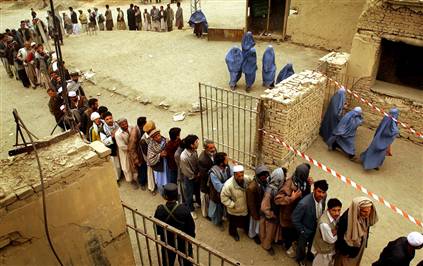
But some games get huge results. For example during the Christian season of Lent, Forward Movement Publications plays with a certain sports metaphor by creating a “game” called Lent Madness. It creates a bracket of saints (yes, saints). But the competition between them is the vote! On each designated day people vote to declare bracket winners, as the competition goes through the days of Lent. Hundreds vote daily. The event has almost 1,500 followers on Twitter, more than 5,000 likes on Facebook, and was even mentioned  in Sports Illustrated!   People take sides, even organizations take sides. And it’s quite clear that votes count. (“The polls close in an hour and only 20 votes separate the two…”)  Here politics, voting, a little education, and a sense of play all come together. I’ve seen people campaign for their favorite saints and I’m told there are parties on election days.

8071280173_77faa90112_bBut on the national election front voting somehow can get careless. It doesn’t have to be. It shouldn’t be. Last year I remember physically wending my way to the downtown office of the Board of Elections because I didn’t trust a mail-in absentee ballot. This year I congratulated a friend who made sure to vote before she headed off on a cruise. And as I don’t always know multiple local candidates, I called someone who does, who also shares my political views, for some input.

So are you willing to vote for fun? Are you willing to vote because whatever the issues are where you live, controversial or not, voting says you are willing to help change the world?

Picture credits from the top
voting instructions — liz west
Women in horse-drawn carriage and on foot march in street for voting rights carrying banners “Mothers Prepare the Children for the World…” “Women Need Votes…” and “Suffrage Pioneers…” — Kheel Center
041009_voting_bcol.h2 — Isaac Mao
Would billionaires spend millions to influence your vote if it had no value? — DonkeyHotey/Flckr

Be Willing to Be Wrong

The wrong way Being willing to be wrong or, perhaps even harder, being willing to change is a challenge that has received a lot of attention from those looking at our actions and the affect those actions have in forming a more positive world. There are articles from the Dali Lama and Deepak Chopra, random sermons, social medial quotes, and disturbing studies on how difficult it is to change your mind, even with facts. But the consensus is that this willingness to see another version of what you know is true is the heart of healing our world.

This week I’ve learned that “being wrong” is a dangerous topic on which to write! The week included my walking off with someone else’s shopping cart, trying to pay with a membership card, and turning in the wrong driveway. And that  all happened in just one day. Perhaps none of those events mattered that much, but my apparent inability to do anything right began in the middle of a funeral. “I should have told Josh,” I whispered to the friend sitting next to me. “Yes, you should have.” And there you have it. Sometimes one is wrong, willingly or not.

IMG_1248Like a two-year old, my immediate response to almost anything is “no” or “can’t” or “won’t.” If I weren’t wrong a lot, I’d never be so bountifully blessed with great friends, beautiful places, and incredible experiences. A few months ago I moved into a small jewel of an apartment with all my worldly goods, many of which I hadn’t seen or touched for more than a decade (a story for another time). For example, I was sure the two big pictures should go by the window and the quilt should go by the corner cupboard to define the “dining room.” “No,” said Phyllis, “the quilt goes in the middle of the pictures. And you should put nails up to hang stuff in the kitchen.” No, I thought. Quilt on the end. No nails.

IKEA railsBut at IKEA I found some incredible “rails” to hang things on for the kitchen – a compromise to my original “no.” And when the pictures were hung, the quilt clearly belonged in the middle. Now this is a tiny example. While my apartment might look better, the world as a whole isn’t affected by better accessibility in my kitchen or by picture placement. Or is it? Is a willingness to be wrong a way for some other truth, perhaps in this case about friendship, hospitality, and beauty, to blossom?

And there are other angles. A common one is assuming you understand what is going on with someone else. “Tell me where I’m wrong.” When Martha Beck trains her life coaches, this is one of the first phrases they learn. This is a concrete way to see whether your assumptions about someone are true. In her recent three-day workshop that I attended, she used that phrase over and over again when engaging with participants. Maybe because they’re in awe of her, no one came up with anything…

6027755162_55bb4ed607_oBut this isn’t always true. One of Beck’s gifts is her ability to tell stories about herself. Yourself is really the only person you can tell stories about. And this “willingness to be wrong” piece comes up over and over in her voice and other voices as people work to heal the planet, beginning with themselves, often in relation to things that seem simple or silly as we go through our day. Remember how sure someone was that you never_______  – pick a topic. Eat grapes. Wear red. Answer texts. Fly kites. And how they argued with you when you bought grapes, “but you never eat them!”? I’d guess that most problems between people are based on “being right.”

Ah, but what about the big issues? As I look out the window while writing this, the world is quite clearly flat. And I can’t think of a single action I might perform right now that doesn’t support that notion or that might be threatened by my being wrong.  But I am wrong. Or am I really? We used a level on every picture when we were hanging them. Isn’t that as true as the curved earth picture that sometimes appears at the top of this page?

The problem with being wrong is that we’re so sure we aren’t. Something is categorically, unequivocally the way we say it is. I used the “flat world” example because currently, although it was once controversial, whether the world is round isn’t a hot, political topic, and I’m more interested in our theory than an argument. But how might those who disagree with us on the hot topics be right? Even if you realize you can’t give up your opinion, what can you learn from the other side? Or is it even a side? Play games with it. If you think it is stupid that so and so is doing whatever, come up with at least three reasons that might make sense. (“Why are they buying only one small thing when there’s no parking and the line is 20 minutes long?” Well? Maybe they got to the car and realized they’d forgotten one thing. Maybe they desperately needed to kill time and impossible shopping does that for them. Maybe they live next door, even if you’re sure there’s no housing there.)

While I haven’t listed controversial topics, you’re welcome to. In fact, I hope you will. But when you do include a bit of the other side. This really is the beginning of making the world work. So let’s start!

_____________________________

The Place Where We Are Right

From the place where we are right
flowers will never grow
in the Spring.

The place where we are right
is hard and trampled
like a yard.

But doubts and loves
dig up the world
like a mole, a plough.
And a whisper will be heard in the place
where the ruined
house once stood.

—Yehuda Amichai (via Parker Palmer on Facebook)

_______________________
Photo credits from top:

The wrong way – smlp.co.uk
Rounds and Then Some (Quilt by Loni Kula) – Spirit Moxie
IKEA rails – Spirit Moxie
Duty Call: Someone is WRONG on the Internet – xkcd.com

Open Doors

3238710453_5475ace4ce_oOne tenet of the early feminist movement was that it was demeaning for a woman to allow a man to open a door for her. My frustration with this idea was aggravated when men carrying huge packages were uncomfortable when a woman opened a door for them.

My basic response to both was, “get a life!”

Why might this be important? There is a dance we do with one another that not only makes it easier to get around, it’s fun! Sometimes having the door held for you is a game—like men holding doors for women or the first person in a group holding it for the next. Once a guy asked me, politely, on our second date, if it was OK if I waited for him to come around the car to open the door for me. For him it was gracious, and for me, it was fun! In the building where I’m living now, the door person opens the door and says, “Welcome home!” which makes me feel a bit like royalty. A dance? A game? But always with a smile and a thank you!

I learned part of this dance by playing with a group called HEC (Handicapped Encounter Christ). Basically it pairs people usually considered disabled because of physical or mental limitations with those of us I call “the theoretically able-bodied.”

The main events I took part in were long weekends where we ate, slept, shared, laughed,2995739171_d0b87d7832_b and cried at a handicapped-accessible camp. What was interesting was that the definition of “who was what” broke down. Yes, there may have been middle-of-the-night aid needed and yes, it was exhausting. But it was the exhaustion of an intense friendship that we all knew mattered and was real. It was listening to dreams, making potentially life-threatening mistakes that somehow were hysterically funny, and the luxury of having someone else go get that paper7507714874_efe090402b_o you left on your bed. If you went to this event with the thought of “doing good,” you burned out, felt put upon, and went home. If you saw yourself as another participant in the weekend, you realized that anyone can go anywhere if everyone bonds together to make that happen. Think about the more familiar Special Olympics which encourages those with mental disabilities to be physically active. There are many ways to open doors for everyone, but the trick is to not push them through unless and until they want to go.

Open doors have implications for the workplace, social networks, politics, and that real estate agent who happens to really understand what you (or I) are looking for. It’s the person looking for mentoring clients that promises to share names from her Rolodex.  At one time I ran a one-person office in a New York City office building. The executive director from the office next door took me under his wing, introduced me to people I should know, and gave advice on the politics of how to participate in a meeting. I’ve talked about having a current mentor who actively uses social media. She broadcast the opening conversation on Chaos and Possibility to the more than 140,000 people (really) who follow her on Twitter. Another friend is coming over to explain to me the mysteries of Instagram over wine and dinner.

Perhaps opening doors is going to another country and either helping someone with the language or needing someone to help you. Opening doors helps both giver and receiver in the long run. Last November when I was in Thailand, I needed shoes for a family wedding. Finally at a market off the beaten tourist route, I stopped in a store (stall?) where the owner knew English, my European shoe size without measuring, and the expectations for Thai weddings. Suddenly, there were three of us critiquing shoes, talking weddings, and generally being girly. As those of you who know me know, I don’t do “girly,” so this was may have been the first time in my life that I did that and enjoyed it. Thai ShoesPlus I found comfortable shoes that I could wear on bare feet that looked great with a long dress. And the owner of the shop made a sale.

These are only a few examples. What can you add? Who has opened doors for you? Which ones do you open for others? How do you play the literal social version and how do you make it fun? And what have you learned?

Photo credits from top:
Doors behind doors – Anders Sanberg
Wheelchair Marathoner – Tom Tai
Wheelchair basketball: Wounded warriors roll to recovery – Army Medicine
Thai shoes – Spirit Moxie


Smile

As I got out my car in the grocery store parking lot, the kid wrangling shopping carts flashed me a smile and suddenly I felt feminine, attractive, interesting, and even a bit sexy. I didn’t know I was missing these, but his smile was really that powerful. I don’t know where it came from. I could invent all kinds of explanations on what it was really about. But it doesn’t matter. I still remember it. It still changed my mind and my day.

Smile Pendant

There is research, and lots of writing, that says it’s good for you. Andrew Newberg in his book in How God Changes our Brain has “Smile” as number eight in his list, “8 Ways to Exercise Your Brain.”  I think it is eight because it is the most obvious, but apparently smiling actually leads to neurological changes.

IMG_1041Meanwhile, smiling seems to be popular with researchers and bloggers, bosses and babies. One example is an article by Naomi Simson, Founder of RedBalloon, who talks about always carrying a smile with her and making smiles genuine. This is the basics of getting this right.

But that’s the rub, isn’t it? Is it right? Is it a genuine smile? Do they really mean it? What’s with that tight lipped look? Yeah, I’ll never trust anyone who looks like that. Or even why should I smile at that idiot, she just thinks she’s better than I am. I’m not making this last one up. Apparently people who feel powerful, even unconsciously, don’t smile at people who they think might be better than they are. Confused yet? But I wouldn’t take this research too seriously. If you want to expand your life, be healthier, and help change the world – yours and others – keep reading here!

For the point here is that this isn’t about what others do. Remember? This is about the small things you can do. Challenge the perceptions. Apparently when doing yoga a small, half smile helps you have a better workout. It sends messages to the brain that you can relax and all is well – and it has nothing to do with if you mean it.

Practice smiling at people as you walk down the street or cruise the grocery store, not IMG_1164because you’re happy, but just to elicit a response. It’s about wishing them a good day, great life, not about how you are. Although however you are I’m betting that after the third one your mood will be up and you find yourself looking for the most unlikely person to engage. That toddler who is “playing” with you when her mom isn’t looking? The homeless dude who values an acknowledgement he’s human? The well coiffed woman at the corner who will barely look at you? The TSA agent when you leave your driver’s license at security? (Yes, well, a rueful smile was all that was needed there.) My favorite is getting the checkout person who is having a no good, terrible, very bad day to smile at least a little. And yes, notice when you don’t smile (I’m important and so I won’t smile at you? I’m so tired and not sure if that person will engage?) and try one anyway.

After writing this I walked down the street and practiced. A mom holding her daughter who turned shy – and the mom and I shared a smile. The all-business guy who didn’t smile, but seemed compelled to ask, “How are you?” And the postman who yelled, “How are you?” with a huge, owning the universe smile.

4434730958_fbfa789bec_oSo this is your homework. Practice. Report in. It will change you along with those around you. Promise.

Stories? Thoughts? How has it changed you and those you meet?


Photo credits (from top):
Smile Pendant – BlueIsCoool
Ethan – SpiritMoxie
Sonia Brooks – SpiritMoxie
Reminder – Ganasha Balunsat

Use Revolving Doors

Revolving doors? Surely I could find something more romantic for a first post! Besides, where do you even find revolving doors anymore? They seem to have disappeared, to be replaced by two sets of doors, or given up to high utility bills as a cost of doing business.

IMG_0932But when you see them, use them – unless you’re carrying huge packages, pushing a stroller, are in a wheelchair, or are scared to death of them. The sign says “please use revolving doors.” Why? When they were invented more than 100 years ago they were seen as a way to prevent the “entrance of wind, snow, rain or dust.” [quoted from the original patent in this Slate article.] 

Today, we use revolving doors as a low cost way to manage the air transfer between spaces.  So when outside air is hotter or colder than that in the building, the revolving door helps reduce the amount of energy needed to keep air at the inside building temperature.

IMG_0736In the example in the Slate article, using the side doors causes eight times the amount of air transfer through the building, i.e., more air to heat or cool. more energy used. The implications of this is a hefty savings for those managing the building. They could use these funds for better salaries, a more inviting environment, essential maintenance, resources for students if in a school, or a Caribbean cruise for the owner.

But even if the the money saved pays for the building owner’s new boat, revolving doors still save a huge amount of energy, which is important to those of us who realize that saving energy is one small part of our saving the world. And in the best butterfly effect theory, one bit of saved energy can lead to yet another.

There’s even more. Using revolving doors slows us down just a bit. Not enough to make us late. Just enough to change our patterns, which may make us think a little differently or see things from another angle. It also gives us another way to share with others. There’s the polite push that makes it easier for another to get through. Or the acknowledgement to a stranger that we’re getting it right. And then there’s our quick smile as we watch children giggling at going round and round until an impatient parent calls. Any of these things connect to something else.

IMG_0937 What can you see? Where might a simple revolving door lead?

Chaos and Possibility

And “the earth was a formless void . . .” [Genesis 1:2a NRSV]. So the story goes, we were created out of nothing – or out of chaos. Now chaos is a fairly popular addition to our understanding of the world, not to describe as a hopeless mess, but as an explanation of the seemingly random and unpredictable. And in popular parlance, it is a theory where minute changes apparently magnify into huge events – and where equally minute actions can prevent them. An example is when in 1972 the meteorologist Edward Lorenz OLYMPUS DIGITAL CAMERApresented a paper, “Does the Flap of a Butterfly’s Wing in Brazil Set Off a Tornado in Texas?” Apparently he didn’t really answer that question. And through that theory that  flap could prevent as well as cause a tornado. But as a result, this image has become an icon for the possible effect of small changes.

In my head this relates to a truth I’ve held for years: we don’t need to do it all to be all things to all people. Ignoring this causes a lot of the angst in the world. It is not our job to fix our neighbor – or our partner or our children. It is not up to us to discover the cure for cancer, make our family “whole,” or rebuild a business, a relationship, a country, the church, or the world. However, the flip side is that we probably have some responsibility for all of the above, and each of us certainly has responsibility for some of it. There are two additional theories that support this.

The first is a personal, although not unique, theory that I call “touch tag evangelism.”* It works very simply. One only need do what one is called to do, what presents itself at any given time, in order to facilitate change. To touch. This can be anything from a late night session expounding the meaning of life to a smile in the grocery store line. Your “touch” can last for the years someone lives in your house to the two-second exchange in the parking lot. And often you don’t even know it happens, but sometimes are given the grace of hearing later that your doing so and so did such and such. And sometimes not. But the chain is there. Someone else lent a hand or an ear. The person read something they “happened” to find or that you recommended. If you discover the cure for cancer, it will be based on the work of those who preceded you, probably accompanied by some accidental (chaotic?) incidents.  And through that series of events the world becomes a little more whole.

IMG_0337_2The second theory is that the world can indeed work and that we can help make it so. Hopelessness is one of the great self-fulfilling prophecies. However it is also a choice to choose to live in hope and to see the wonders of creation. To live in hope can be equally self-fulfilling.

Even if we’re called to run for public office or to finance a great initiative, it is really just, like above, a touch, part of a series of little things that we can all do to nurture creation and community. For me this began as a hundred “how to make the world work” words and phrases on note cards, a series of “if only people” actions that could help and would multiply if done by more than me. Some are specific (smile!). Some are more reflective (be willing to be wrong [even this theory!]). But their importance was highlighted in a throw-away remark at a recent public presentation. As we took our water break at a retreat house with cups and jugs of water, the presenting professor shared that her students refused to use their own cups in class on the theory that what they did didn’t matter.

I’m inviting you to the conversation that it does matter. Let us answer the challenge one touch, one flap of a wing, at a time, and see where they lead. My bet is that together we can change the world. To facilitate this I will be posting about one topic each week. But this is a conversation not a monologue, so responses are encouraged. You can sign up to receive the posts as they appear in the sidebar on the right.

*Since I’m using the word “evangelism,” this clearly came from my church background and experiences. The short version is that God “saves” (if you use that term). People don’t.